Solid State Drives – Fast, Quiet… But They Can Still Die
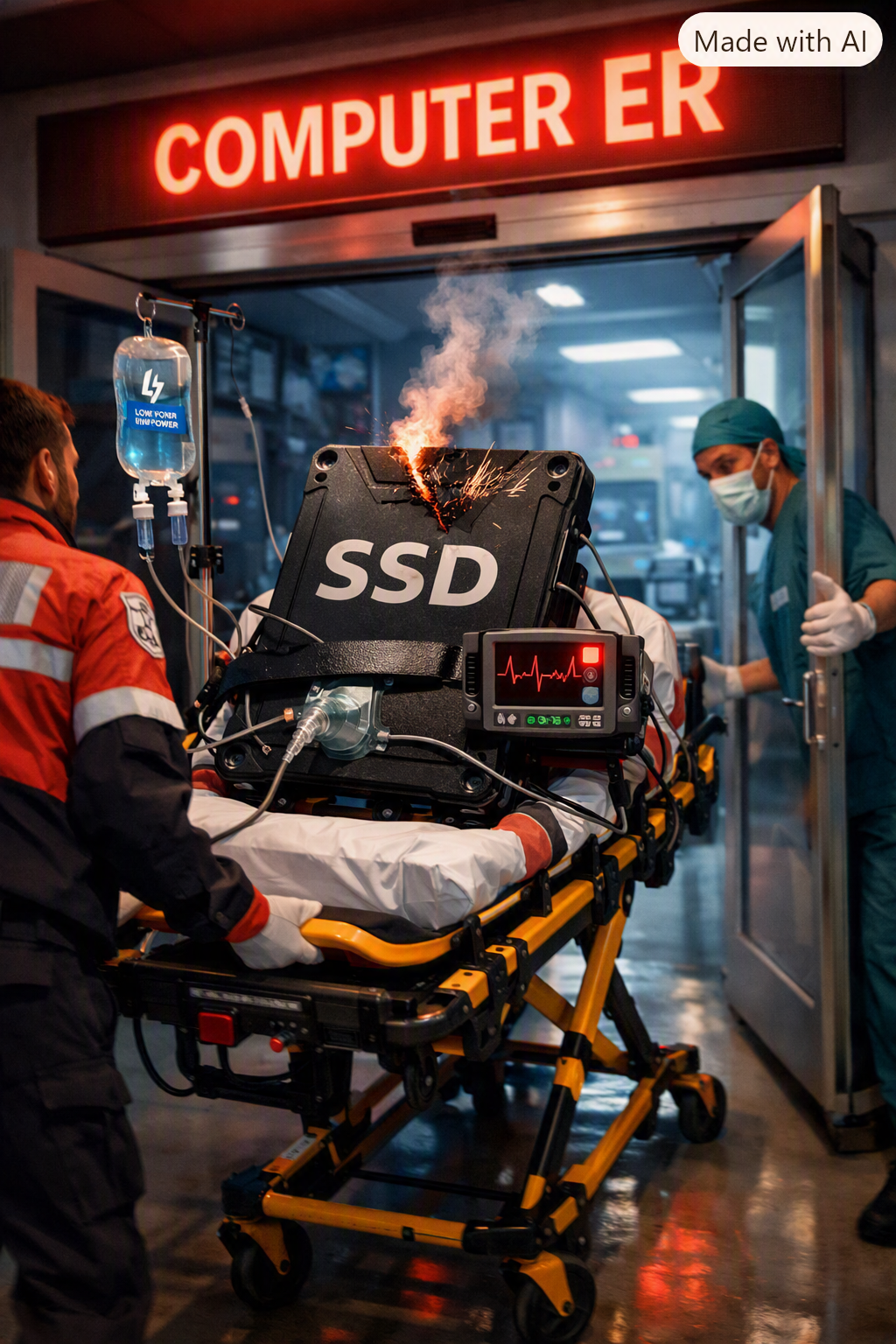
Solid State Drives – Fast, Quiet… But They Can Still Die
SSDs — solid state drives — have changed computing. No moving parts, dead silent, way faster than the old mechanical hard drives. But they just like mechanical drives don't last forever.
They store data in flash memory, and those memory cells can only be written and erased so many times.
The good news is modern SSDs spread that wear evenly across the drive, so for normal home or office use, you'd struggle to actually wear one out.
Most decent SSDs last five to ten years or more.
So why do they fail? Usually it's not the memory itself — it's the controller chip, corrupted firmware, heat, or a dodgy power supply.
Also cheap, low-quality drives are just less reliable overall.
Here's the key difference from old hard drives: a mechanical drive usually gives you warning signs — clicking, slowing down, errors — before it dies.
An SSD can just vanish, with no warning at all so if you have had one for a couple of years it may pay you to get it tested , a service I can provide.
Now for the real takeaway: an SSD is not a backup.
Doesn't matter if it's six months or six years old — anything important needs a copy somewhere else too.
Every drive fails eventually. The only question is whether your data goes down with it.
if you would lie to discuss the health of your hard drives or your backup strategy , feel free to reach out and Contact Me